

A London-based facialist with over two decades of experience, blending traditional manual massage with modern skin technologies.
61 Kensington Church Street,
Notting Hill, W8 4BA
TL;DR: Polynucleotide treatment uses purified DNA fragments, most often sourced from salmon, injected into the skin to wake up your fibroblast cells and produce fresh collagen and elastin. It is usually given as a short course, and it is most requested under the eyes and across the cheeks and neck.
Polynucleotide treatment uses long chains of nucleotides, the building blocks of DNA, drawn from purified fish sources such as salmon or trout. Clinics often shorten this to PDRN, which stands for polydeoxyribonucleotide. The material is processed to remove anything your body would recognise as foreign, leaving a clean, stable fragment.
Unlike filler, it does not add volume. It changes how your skin behaves over time.
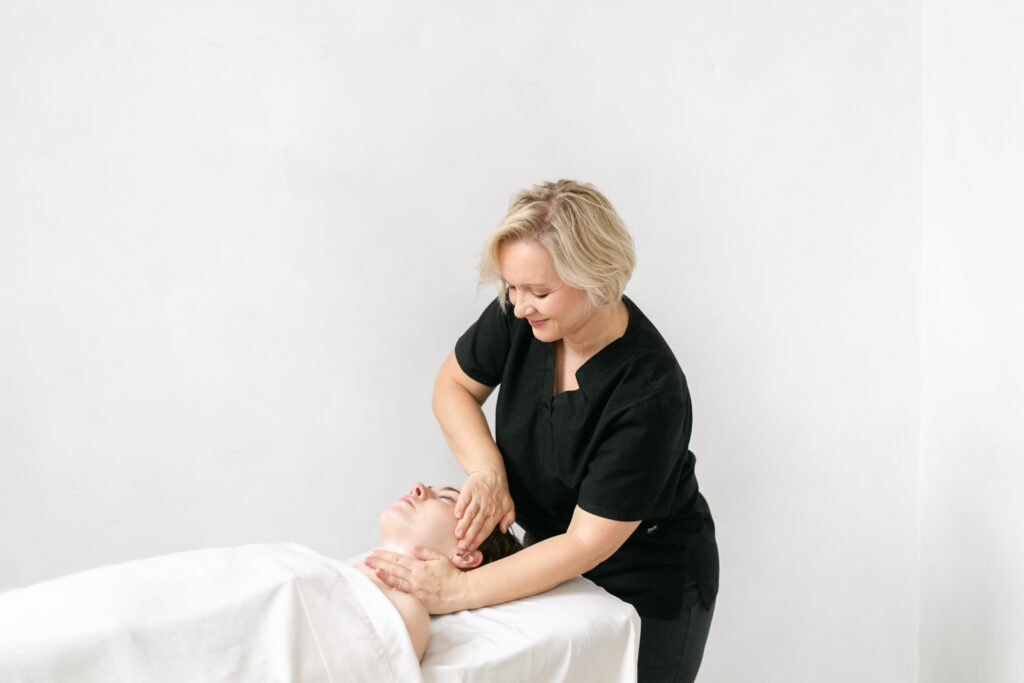
Once injected, polynucleotide treatment reaches fibroblasts, the cells responsible for making collagen and elastin. These fragments signal the fibroblasts to get to work, which is why results build gradually.
You will not see much change after the first session. Most people notice firmer, better hydrated skin from around four weeks in, with the fuller effect showing up two months after a second treatment.
The under eye area is where polynucleotide treatment gets searched for most. Skin here is thin and shows tiredness fast. Injected carefully, it softens puffiness and shadows in that area without the swelling risk that comes with filler.
Beata Durtan’s Meso-Eye uses this approach specifically for the under eye area, working through mesotherapy to deliver active ingredients deeper into that delicate skin.
Away from the eyes, polynucleotide treatment is used across the cheeks, neck and hands to improve texture and hydration. If your skin feels rough or crepey rather than lined, this is often a better starting point than filler.
Beata offers this as Mesotherapy with PDRN, or as Microneedling with PDRN, which drives the same PDRN deeper through the microchannels created during needling.
PRP uses your own blood, spun down to concentrate growth factors, then reinjected. Polynucleotide treatment uses a manufactured, standardised product instead, so the dose stays consistent from session to session. Some clinics combine the two, and that decision should sit with your practitioner.
A typical course runs two sessions, spaced two to four weeks apart. Some people return for a top-up after several months once the collagen boost starts to fade. Ask your practitioner to set a schedule based on your skin, since thinner or more sun damaged skin often needs closer spacing. Microneedling with PDRN is offered as a course of four sessions, which reflects how this timeline plays out in practice.

Good aftercare protects the results you are paying for. These are general guidelines, so always follow the specific instructions your clinic gives you.
Skip makeup on the treated area for at least half a day. The injection sites are tiny, but they are still open, and product carries bacteria you do not want near them yet.
Raising your heart rate or sitting in a sauna increases blood flow to the face, which can worsen swelling and bruising. Save the gym and the sunbed for another day.
A 2024 review of polynucleotide studies, published in the Journal of Cosmetic Dermatology, looked at 219 patients across nine trials. Side effects were mostly mild and short lived, and most patients were satisfied with their results. Research in this area is still growing, which is why a proper consultation matters. Beata assesses your skin first and recommends the approach that suits it, rather than applying a fixed protocol to everyone.
Cost depends on the area treated and how many sessions your course needs. Beata will walk you through pricing and the right protocol for your skin during a consultation, so there are no surprises.
Results build over several weeks, so the sooner you start your course, the sooner you see the difference. Book your consultation with Beata and give your skin a head start before your next event.
September 14, 2026
TL;DR: A non surgical facelift tones facial muscles and refreshes your skin without cutting or injecting anything. Most...
September 8, 2026
TL;DR: A rosacea skincare routine works when it repairs the skin barrier before it treats the redness. Skip...
September 3, 2026
TL;DR: Mesotherapy for face treatments delivers a nourishing infusion into the skin through nano-injections. At The Skin Studio,...
September 1, 2026
TL;DR: What is lymphatic drainage? It’s a manual facial massage that moves trapped fluid out of your skin...