

A London-based facialist with over two decades of experience, blending traditional manual massage with modern skin technologies.
61 Kensington Church Street,
Notting Hill, W8 4BA
TL;DR: A non surgical facelift tones facial muscles and refreshes your skin without cutting or injecting anything. Most treatments combine a few technologies, such as microcurrent, to lift and firm the face over a course of sessions.
A non surgical facelift is a facial treatment that firms and lifts the skin without surgery. It doesn’t involve a scalpel or a general anaesthetic. Instead, it uses tools and techniques that work on the muscles and skin from the outside.
You might see it grouped with fillers or botox, but those are injectable treatments. Massage and microcurrent do the work here instead, with some clinics adding light based technology on top. The result is a firmer, brighter face, without any recovery time.
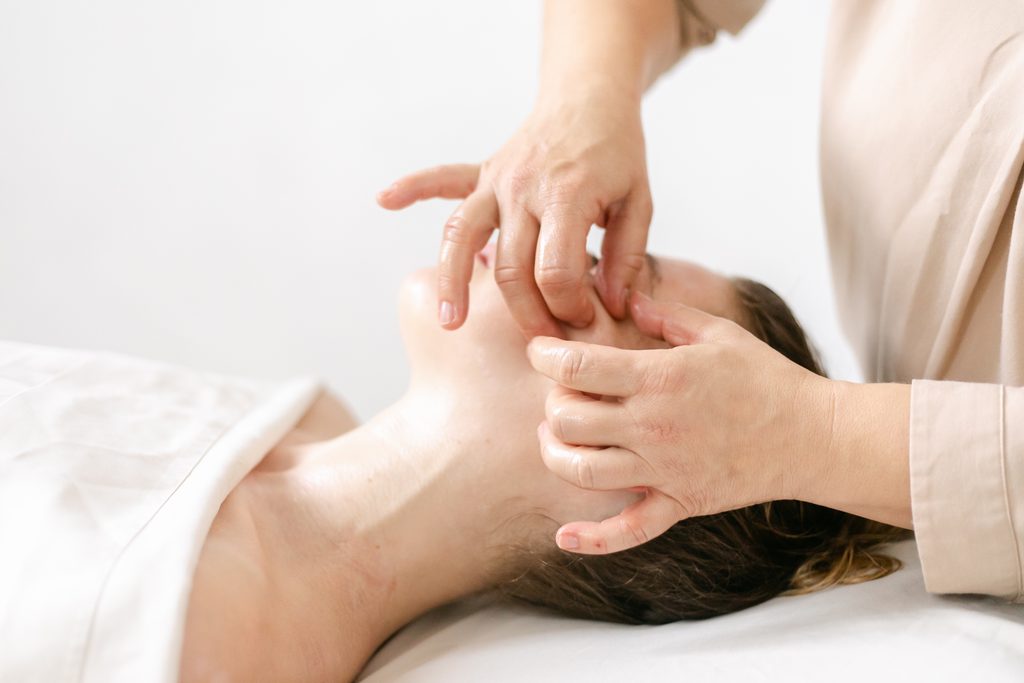
The treatment works on two things at once, your facial muscles and your skin. Gentle electrical currents mimic your body’s own signals, toning the muscles underneath. Clinics often pair this with a peel or a course of light therapy to refresh the surface. The exact combination depends on where you go.
One session won’t reshape your face. The muscles need repeated stimulation to hold their tone, so results build across a course of treatments.
Most treatments like this are built from a few core elements. Beata Durtan’s Signature Ultimate Lift is one example. It combines several of these into a single 90 minute session.
A low level current passes through the face using small probes. You won’t feel much beyond a light tingling. Over a course of sessions, this helps tone the muscles that support your natural contours.
A cold peel, chosen for your skin type, refreshes the surface layer. This supports cell turnover, so the skin underneath looks brighter once it’s revealed.
Low level laser therapy works beneath the surface. It supports the skin’s own repair processes, rather than changing anything visibly during the session itself.
Oxygen therapy is often the final step. It boosts circulation to the surface of the skin, leaving it looking more awake straight after treatment.
This depends on what you’re expecting. If you want the same outcome as surgery, this kind of treatment won’t get you there. It doesn’t remove excess skin or reposition tissue.
What it does do is support tone and radiance using your body’s own processes. The current stimulates muscle activity. The peel and light therapy support skin renewal. Over repeated sessions, that adds up to visibly firmer, brighter skin.
There’s no single answer. It depends on your skin and how often you have treatments. What is consistent is that results build with a course of sessions.
Most practitioners recommend a course to begin with, followed by maintenance sessions every few weeks or months. Ask about a schedule during your consultation. That’s the only way to get a timeline that suits your own skin.
A surgical facelift usually needs weeks of recovery. This approach needs none. You can go straight back to your day after a session.
Surgery changes the structure of your face in one procedure. This approach builds gradually, through a course of sessions, and needs ongoing maintenance to keep the effect visible.
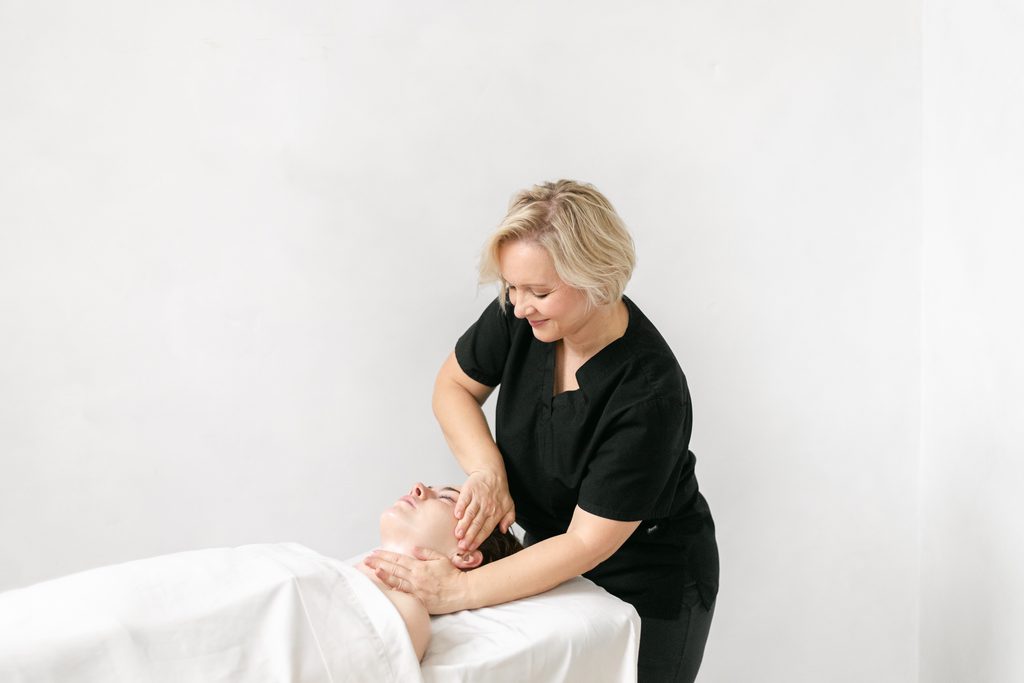
Beata Durtan offers a non surgical facelift through her Signature Ultimate Lift. It combines microcurrent, a cold peel, light therapy and oxygen in one session at her Kensington studio.
Book a consultation before committing to a course of sessions. Beata can look at your skin directly and tell you what’s realistic for your face.
TL;DR: Polynucleotide treatment uses purified DNA fragments, most often sourced from salmon, injected into the skin to wake up your fibroblast cells and produce fresh collagen and elastin. It is usually given as a short course, and it is most requested under the eyes and across the cheeks and neck.
Polynucleotide treatment uses long chains of nucleotides, the building blocks of DNA, drawn from purified fish sources such as salmon or trout. Clinics often shorten this to PDRN, which stands for polydeoxyribonucleotide. The material is processed to remove anything your body would recognise as foreign, leaving a clean, stable fragment.
Unlike filler, it does not add volume. It changes how your skin behaves over time.
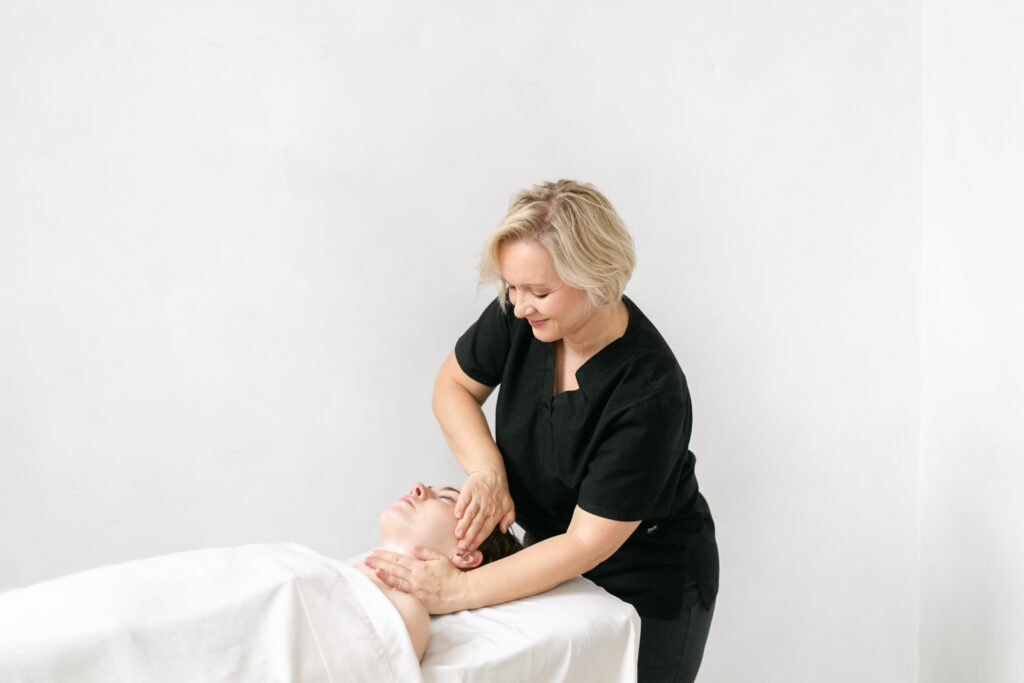
Once injected, polynucleotide treatment reaches fibroblasts, the cells responsible for making collagen and elastin. These fragments signal the fibroblasts to get to work, which is why results build gradually.
You will not see much change after the first session. Most people notice firmer, better hydrated skin from around four weeks in, with the fuller effect showing up two months after a second treatment.
The under eye area is where polynucleotide treatment gets searched for most. Skin here is thin and shows tiredness fast. Injected carefully, it softens puffiness and shadows in that area without the swelling risk that comes with filler.
Beata Durtan’s Meso-Eye uses this approach specifically for the under eye area, working through mesotherapy to deliver active ingredients deeper into that delicate skin.
Away from the eyes, polynucleotide treatment is used across the cheeks, neck and hands to improve texture and hydration. If your skin feels rough or crepey rather than lined, this is often a better starting point than filler.
Beata offers this as Mesotherapy with PDRN, or as Microneedling with PDRN, which drives the same PDRN deeper through the microchannels created during needling.
PRP uses your own blood, spun down to concentrate growth factors, then reinjected. Polynucleotide treatment uses a manufactured, standardised product instead, so the dose stays consistent from session to session. Some clinics combine the two, and that decision should sit with your practitioner.
A typical course runs two sessions, spaced two to four weeks apart. Some people return for a top-up after several months once the collagen boost starts to fade. Ask your practitioner to set a schedule based on your skin, since thinner or more sun damaged skin often needs closer spacing. Microneedling with PDRN is offered as a course of four sessions, which reflects how this timeline plays out in practice.
Good aftercare protects the results you are paying for. These are general guidelines, so always follow the specific instructions your clinic gives you.
Skip makeup on the treated area for at least half a day. The injection sites are tiny, but they are still open, and product carries bacteria you do not want near them yet.
Raising your heart rate or sitting in a sauna increases blood flow to the face, which can worsen swelling and bruising. Save the gym and the sunbed for another day.
A 2024 review of polynucleotide studies, published in the Journal of Cosmetic Dermatology, looked at 219 patients across nine trials. Side effects were mostly mild and short lived, and most patients were satisfied with their results. Research in this area is still growing, which is why a proper consultation matters. Beata assesses your skin first and recommends the approach that suits it, rather than applying a fixed protocol to everyone.
Cost depends on the area treated and how many sessions your course needs. Beata will walk you through pricing and the right protocol for your skin during a consultation, so there are no surprises.
Results build over several weeks, so the sooner you start your course, the sooner you see the difference. Book your consultation with Beata and give your skin a head start before your next event.
TL;DR: A rosacea skincare routine works when it repairs the skin barrier before it treats the redness. Skip the strong actives until that barrier is stable, and the redness has a much better chance of settling by itself.
If your skin flushes easily or stays red without an obvious reason, it’s tempting to treat the redness directly. A calming cream feels like the right fix in the moment.
The redness usually sits on top of a weakened skin barrier. Treating it without repairing what’s underneath tends to keep the cycle going. Repair the barrier first and the redness has a genuine reason to calm down. Beata Durtan’s Biome Restoration facial follows this same order, treating rosacea prone skin by repairing the barrier first.
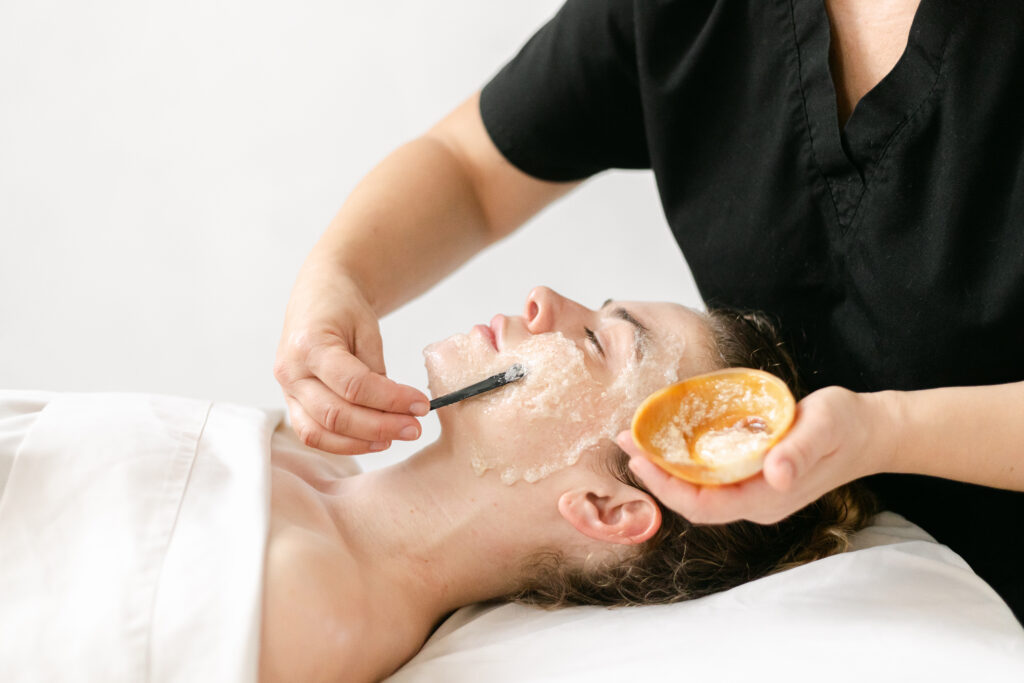
A foaming cleanser or hot water leaves your skin feeling tight and squeaky clean. That tightness means your natural oils have gone, and the barrier is thinner for it.
Choose a cream or gel cleanser without sulphates or added fragrance. Keep the water lukewarm. Pat your skin dry with a soft towel rather than rubbing it.
This ingredient strengthens the skin barrier and reduces visible redness over time. It’s well tolerated by most sensitive skin types and works alongside almost everything else in your routine.
Azelaic acid calms inflammation and helps even out skin tone. Start with a lower strength and use it every other day at first, since it can feel like a mild tingle when your barrier is already compromised.
Ceramides are the fats that hold your skin barrier together. Rosacea prone skin usually runs low on them, so a moisturiser with ceramides helps rebuild what’s missing underneath the surface.
Also called cica, this ingredient is widely used in calming formulas because it soothes irritation without adding heaviness to the skin.
Denatured alcohol dries out the skin and disrupts the barrier further. If a toner feels cooling and then tight a few minutes later, that’s the alcohol at work.
Scrubs and brushes both cause tiny tears in skin that’s already fragile. Rosacea prone skin struggles with friction, however gentle the product claims to be.
Fragrance is one of the most common triggers for flare ups, even in products marketed as gentle. Check the ingredients list itself, since gentle on the label doesn’t always mean gentle on your skin.
Glycolic and salicylic acid at high concentrations can push reactive skin into a flare. If you want exfoliation, azelaic acid is a gentler route.

Barrier repair happens gradually, and it responds to consistency more than to new products. Reduce your routine to a gentle cleanser and a barrier repairing moisturiser, then add a mineral SPF on top. Skip active ingredients for two to three weeks and let the skin settle before reintroducing anything new.
Skin cell turnover takes around four weeks, so give any change that long before deciding it isn’t working.
Triggers vary from person to person, but the common ones are heat, alcohol, spicy food, sun exposure and stress. Keeping a simple diary for a few weeks often reveals a pattern you hadn’t noticed.
Cold wind and sudden indoor heat both provoke flushing, so it’s worth layering your skincare with that in mind.
In the morning, cleanse with a cream cleanser, apply a niacinamide serum, follow with a ceramide moisturiser, and finish with a mineral SPF of at least factor 30. In the evening, cleanse again, apply azelaic acid if your skin tolerates it, then seal everything in with the same moisturiser. That covers the whole routine, and most days you won’t need anything more than this.
If redness persists despite a barrier focused routine, or you’re unsure which ingredients are safe for your skin, a professional assessment saves months of trial and error. Beata Durtan’s Biome Restoration facial is built for sensitive, reactive skin, including rosacea, with a focus on repairing the barrier and rebuilding the skin’s antioxidant defences. You can book an appointment directly with Beata to have your skin properly assessed.
Give your barrier about a month of consistent care before judging whether it’s working. Most flare ups calm down well before then, but the barrier itself needs the full stretch to rebuild.
TL;DR: Mesotherapy for face treatments delivers a nourishing infusion into the skin through nano-injections. At The Skin Studio, Beata uses a PDRN-based formulation. It stimulates collagen and elastin production, and it supports tissue repair and skin quality. Here’s what’s in the injection and how it works.
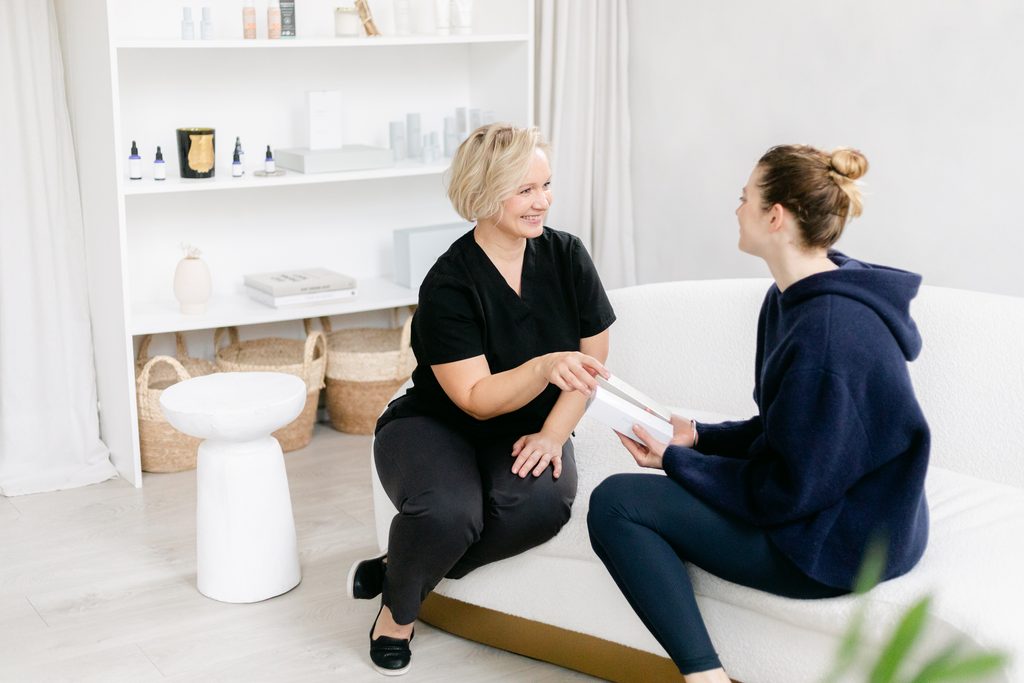
Mesotherapy for the face is an injectable treatment that delivers active ingredients directly into the skin. The formula bypasses the surface layer and reaches the dermis, where it can take effect.
The injections are shallow and use very fine needles. The treatment does not add volume or change the shape of the face. It supports the skin’s own repair and refreshment processes.
The nano-injections carry a nourishing infusion into the skin. This stimulates the production of dermal collagen and elastin, the two proteins responsible for keeping skin firm and bouncy.
Over a course of sessions, this steady stimulation brightens the skin and supports its natural repair process.
At The Skin Studio, the mesotherapy formulation is built around PDRN.
PDRN stands for Polydeoxyribonucleotide. It’s a regenerative ingredient known for its healing and repairing properties, and it works by stimulating your skin’s own regeneration processes.
PDRN is typically derived from salmon DNA, most commonly sperm DNA. It’s purified and processed for cosmetic use, and the salmon origin is standard across the regenerative aesthetics industry rather than specific to any one clinic.
PDRN promotes tissue repair at a cellular level. This supports the skin’s natural recovery process.
The formulation supports collagen production directly. Collagen keeps skin firm and resilient, and levels naturally decline with age.
PDRN improves overall skin quality. This includes both texture and tone across the whole face.
This treatment suits skin that looks tired or dull. It also works well for uneven tone.
If your skin has lost its bounce, or you have noticed dullness that skincare has not shifted, this treatment is designed for that concern. It is not designed to contour the face or add volume.
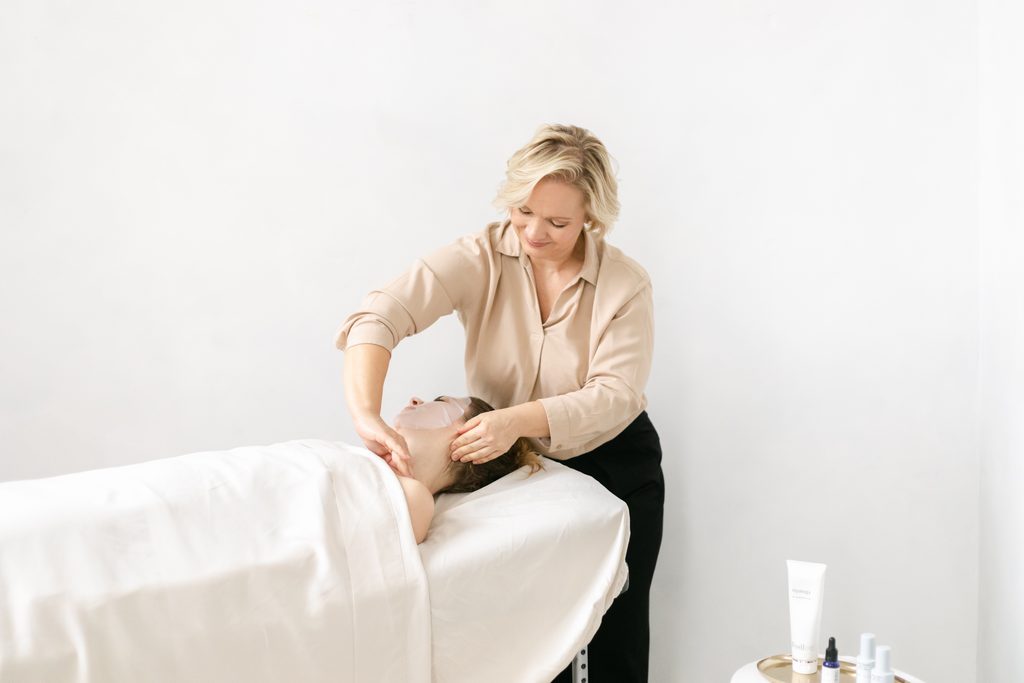
Both treatments aim to stimulate collagen production. They reach that goal through different mechanisms.
Microneedling creates controlled micro-injuries with a device covered in fine needles, which triggers your skin’s healing response. Mesotherapy delivers a nourishing infusion through injection, combining the mechanical stimulation of the needle with the active ingredients in the formula itself.
Beata offers both treatments at The Skin Studio. If you are not sure which one fits your skin, get in touch and she can advise you directly.
You will start with a skin assessment. Beata builds the treatment around what your skin needs on the day.
The injections themselves are quick, using fine needles at a shallow depth. Afterwards, your skin may look slightly flushed for a short period before settling.
This depends on your skin’s starting point and what you are aiming for. Beata will talk you through a plan at consultation.
Consistency matters more than any single session. Collagen and elastin production build gradually over a course of treatments.
Mesotherapy has a long history as a minimally invasive treatment. The ingredients used at The Skin Studio are chosen for their regenerative properties.
As with any injectable, it should always be carried out by someone properly trained. This is why the assessment stage matters.
If you are pregnant or breastfeeding, mention this before booking. The same applies if you are managing a skin condition. Beata will advise you on whether mesotherapy is the right fit for you.
Beata offers mesotherapy from her Kensington studios. If your skin has been asking for more than you can give it, book an appointment and find out what a tailored course of PDRN treatment can do for you.
Skin regenerates on its own timeline. A consultation with Beata will tell you what yours needs right now.
TL;DR: What is lymphatic drainage? It’s a manual facial massage that moves trapped fluid out of your skin to reduce puffiness and calm inflammation. At The Skin Studio by Beata Durtan, it’s done entirely by hand, with no machines involved.
Puffiness usually comes down to fluid sitting under your skin instead of draining away. It shows up fastest around your eyes and jaw, where the tissue is thin.
Lymphatic drainage treats that fluid directly. It’s a manual technique used specifically to move that build-up out.
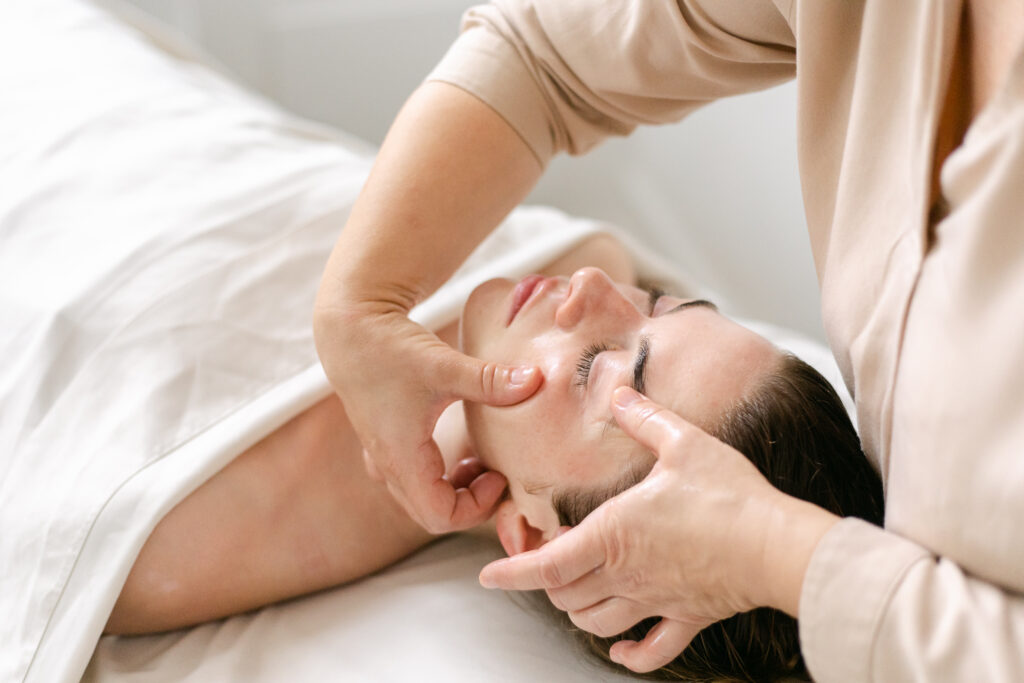
Lymphatic drainage is a manual massage technique. A trained facialist uses light, rhythmic pressure to encourage fluid movement through your lymphatic system, the network that carries away waste and excess water from your tissue.
Unlike a deep tissue massage, it’s soft. You’re not working muscle here. You’re guiding fluid along a route it would normally take by itself, if it hadn’t slowed down.
Your face drains through lymph nodes near your jaw and ears, then continues down through your neck. Fluid moves from your skin toward these nodes, then on to be filtered elsewhere in your body.
When that drainage slows, fluid pools under the skin. That’s what causes puffiness, particularly around the eyes and jawline, where the tissue is thinner and shows swelling fastest.
Yes, and this is usually the first thing people notice. Moving trapped fluid toward your lymph nodes reduces visible swelling, especially under the eyes and along the jaw.
At The Skin Studio by Beata Durtan, the treatment is designed to support tissue that’s become damaged or blocked by swelling and water retention. It’s manual work throughout, with no machines involved.
It supports your body’s own detoxification process. Moving fluid through the lymphatic system helps clear waste that’s been sitting in your tissue, which can leave skin looking brighter and less congested.
It works beyond your face too. The massage also supports detoxification and helps restore balance through the rest of your body.
You’ll lie back while your facialist works through gentle strokes, starting near your lymph nodes and moving out across your face and neck. There’s no discomfort at any point.
A session usually runs between 30 and 60 minutes. You won’t need downtime afterwards. Your skin might look slightly flushed for a short while, then settle into a calmer, brighter appearance.
Your face will likely feel lighter within a few hours. Staying hydrated afterwards helps the effect hold for longer.
This treatment suits you if your face swells overnight, after flights, salty food, or a stretch of bad sleep. It also works well if you’re recovering from another facial procedure, since it helps calm tissue that’s swollen or under stress.
It doesn’t involve anything invasive, so most skin types tolerate it comfortably. There’s no heat involved, and no needles either.
Beata has spent over twenty years working with hands-on facial techniques, and lymphatic drainage sits at the centre of her approach to skin recovery. Every treatment starts with the same goal: strengthen your skin barrier and calm inflammation before addressing anything else.
Beata treats clients in Kensington, London, at Egham Atelier Clinic on Wednesdays and Saturdays, at Maison Restorative in Jersey once a month, and at her South of France residency over summer.
Booking a session a day or two before something important gives the puffiness time to settle before you need to look your best.