

A London-based facialist with over two decades of experience, blending traditional manual massage with modern skin technologies.
61 Kensington Church Street,
Notting Hill, W8 4BA

Dermapen microneedling works with the skin’s own repair response to bring some of that production back. It’s one of the techniques London facialist Beata Durtan uses in her biostimulation treatments, where it’s paired with active ingredients chosen for each client’s skin.
This guide looks at what happens to the skin during a session and in the months afterwards, so you know what the treatment is doing beneath the surface.
Dermapen is an automated pen fitted with a sterile, single-use cartridge of fine needles. As it glides over the skin, the needles create thousands of tiny channels in the surface.
The technique dates back to the late 1990s, when it was done with a handheld roller and became known as percutaneous collagen induction therapy. A pen offers more control, as needle depth can be adjusted for each area of the face, allowing the delicate skin around the eyes to be treated more lightly.
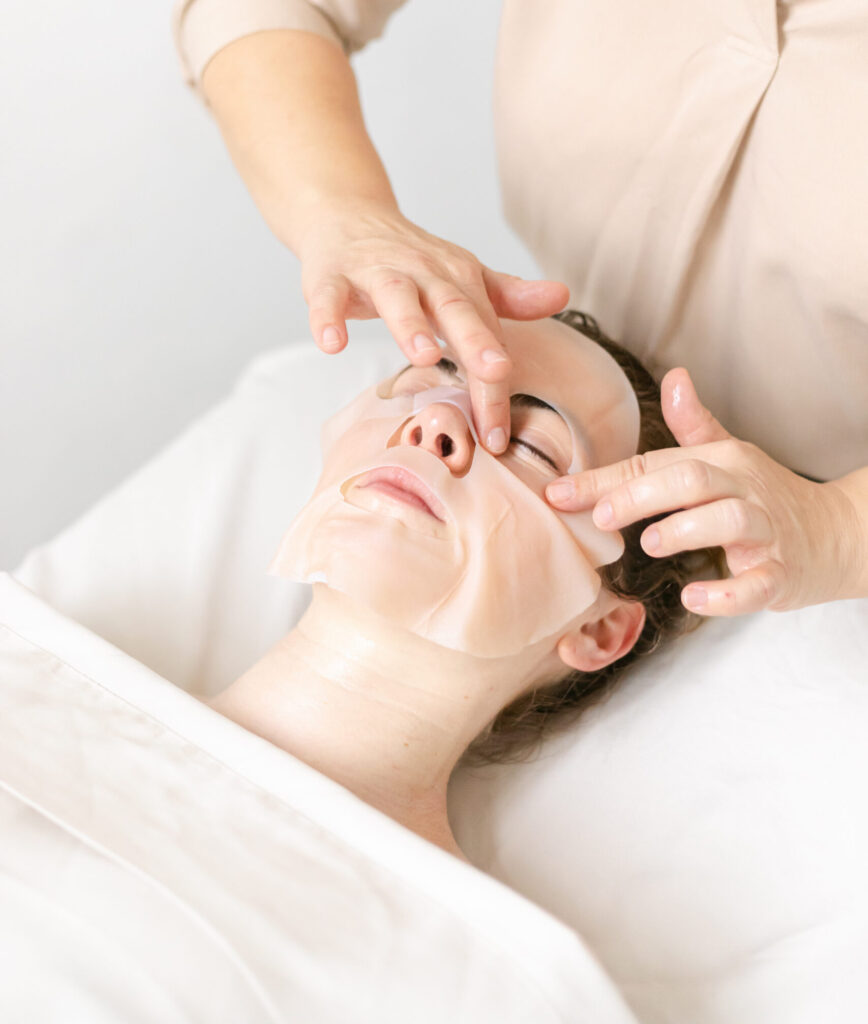
The skin treats each channel as a very small wound and starts repairing it straight away. Because the channels are so fine and evenly spaced, the tissue around them stays intact and closes over quickly. That controlled injury is what sets the whole process in motion.
Microneedling uses no heat or light, which is part of the reason it’s considered suitable for all skin types.
Shortly after treatment, immune cells called monocytes release growth factors that support collagen production and the formation of new blood vessels. Fibroblasts, the cells responsible for building collagen and elastin, move into the treated area and get to work. Studies have also recorded increased gene activity for type I collagen after microneedling, along with raised levels of several growth factors.
The first collagen the skin lays down is type III, a finer form that dominates the early stages of healing. Over the following months it’s gradually replaced by type I collagen, which is stronger and can last for five to seven years. This slow replacement is why results keep developing well after the appointment itself.
The outer layer of skin is designed to keep things out, which limits how far most skincare ingredients can travel. Microneedling briefly increases the skin’s permeability while the channels are open.
Beata makes use of this window every time she performs dermapen microneedling. Active ingredients applied during or straight after needling pass through the channels and reach the deeper layers where they can do the most work.
Her Microneedling with Advanced Retinoid or NCTF® treatment gives clients a choice of two formulas. The retinoid option centres on retinoic acid ester, which promotes cell renewal and collagen production. The NCTF® cocktail is a revitalising complex of vitamins and hyaluronic acid among other actives, used to nourish and hydrate tired skin.
The regenerative options go a step further. Microneedling with Exosomes delivers cell-derived messengers that carry growth factors and signalling molecules to support repair. Our guide to what exosomes are and why they’re used in skin treatments covers them in more detail. Microneedling with PDRN is the treatment Beata describes as her most advanced biostimulation protocol, focused on deep regeneration and long-term resilience.
Each of these is a 90-minute treatment, and each can be booked individually or as a course of four.
Beata’s microneedling treatments are aimed at clients who want to improve skin texture and restore some of the firmness that fades with age. Her service pages also mention refining pores and softening fine lines as part of what the retinoid option can do.
It isn’t right for everyone at every moment. Certain skin conditions and medications mean treatment needs to be postponed, which is why Beata reviews your skin and medical history at consultation before recommending a protocol.
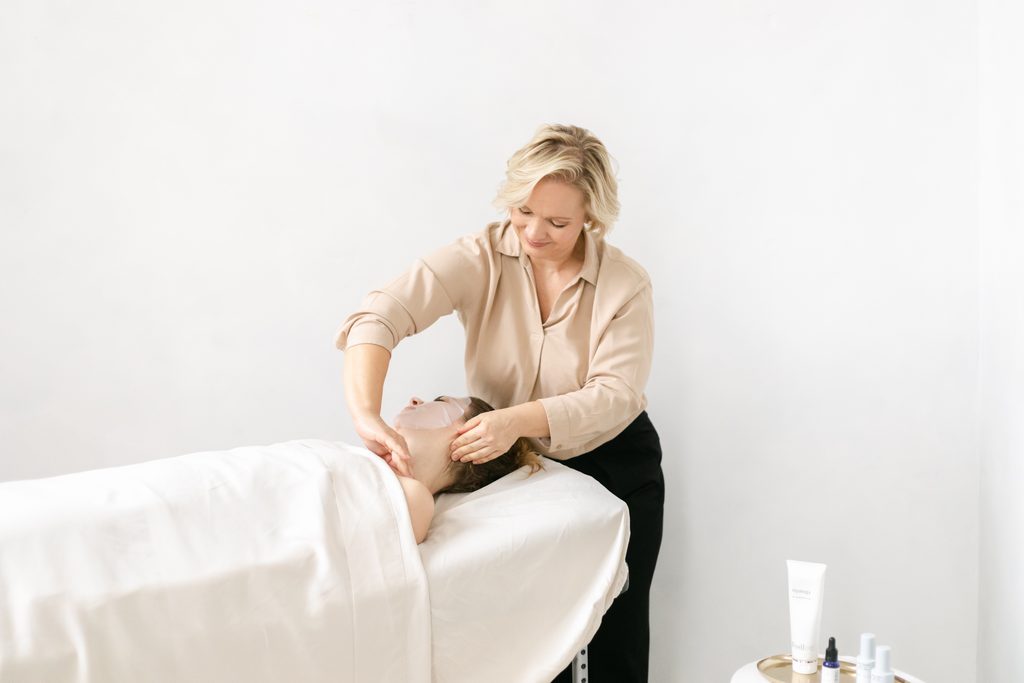
Since new collagen takes months to form and mature, the changes from dermapen microneedling appear gradually. Skin tends to look fresher in the weeks after a session. Texture and firmness then continue to improve as the type III collagen is replaced by type I. A course gives the skin repeated prompts to keep rebuilding, which is why each of Beata’s microneedling treatments is offered as a series of four.
The right pairing for your skin depends on what you’d like to change and how your skin responds. Beata will assess this with you and recommend the treatment that suits you best. You can book an appointment here.
October 21, 2026
TL;DR: A face lift massage tones the muscles beneath your skin, and clinical research shows regular sessions can...
October 13, 2026
TL;DR: Menopause skincare is about protecting a weakening skin barrier and supporting collagen as oestrogen falls. Skin can...

October 2, 2026
TL;DR: Men’s facial treatments with Beata lasts 60 minutes. The first part centres on enzymes and steam to...

September 28, 2026
TL;DR: Mesotherapy places tiny amounts of active ingredients into the middle layer of your skin. Beata’s version uses...
September 25, 2026
TL;DR: Facial lymphatic drainage uses light, rhythmic pressure to move trapped fluid out of puffy skin. Beata’s 80-minute...
September 18, 2026
TL;DR: Exosomes are cell-derived particles that carry signals between cells, supporting repair and collagen production. In skin treatments,...