

A London-based facialist with over two decades of experience, blending traditional manual massage with modern skin technologies.
61 Kensington Church Street,
Notting Hill, W8 4BA

TL;DR: Hyaluronic acid holds water in the skin and keeps it plump, and it suits almost every skin type. Dehydrated skin is short of water, dry skin is short of oil, and smaller hyaluronic acid molecules reach further into the skin to help with the first.
Hyaluronic acid is a sugar molecule your body makes on its own, and around half of it is found in your skin. It sits in the deeper layers and binds water, which keeps the skin plump and supple. Hydration is its main job, and that’s why it appears in so many serums and facials.
Levels fall as we get older, so the skin holds less water over time. It’s one reason mature skin looks less bouncy, even with a good routine.
Hyaluronic acid adds water without adding oil, so it works on oily and breakout-prone skin as well as dry skin. The molecule is light and doesn’t clog pores. It’s well tolerated, so it suits sensitive skin too.
It’s worth noting that a product contains more than one ingredient, so check the full formula and patch test anything new if your skin reacts easily.

Dehydrated skin feels tight, especially after cleansing. It looks dull, and fine lines show up more clearly when you smile or squint. You might also notice skin that feels rough in some areas and greasy in others.
Dry skin is a skin type. It produces less oil, so it can feel rough and flaky all year round. Dehydrated skin is a condition, and it means the skin is short of water. Any skin type can become dehydrated, and oily skin that feels tight is a common sign of it.
You can have both at once. Dry skin needs oils and richer creams, and dehydrated skin needs water-binding ingredients such as hyaluronic acid.
Central heating and cold wind draw water out of the skin, which is why dehydration gets worse in winter. Harsh cleansers and over-exfoliating strip away the barrier that holds water in.
Hyaluronic acid comes in different sizes, measured by molecular weight. Large molecules stay on the surface. They form a light film that slows water loss and gives an instant plumping effect, which fades once you wash it off.
Low molecular weight hyaluronic acid is small enough to travel further into the skin. A 2011 study compared creams made with five different weights, used around the eyes for 60 days. Every version improved hydration and elasticity, and the lower weights also reduced wrinkle depth. The researchers linked this to the smaller molecules reaching deeper.
Apply a hyaluronic acid serum to damp skin, straight after cleansing. It needs water to bind to, and damp skin gives it plenty. Follow with a moisturiser to seal that water in. This step matters most in dry, heated rooms, where water leaves the skin faster.
You can use it morning and evening. Apply it before heavier creams, and before SPF in the day.
Yes. Hyaluronic acid pairs well with retinol and helps with the dryness and tightness retinol can cause. It works alongside vitamin C too.
Freshly treated skin is the exception. After microneedling, the skin is more reactive, so retinol and exfoliating acids wait until it has fully calmed.
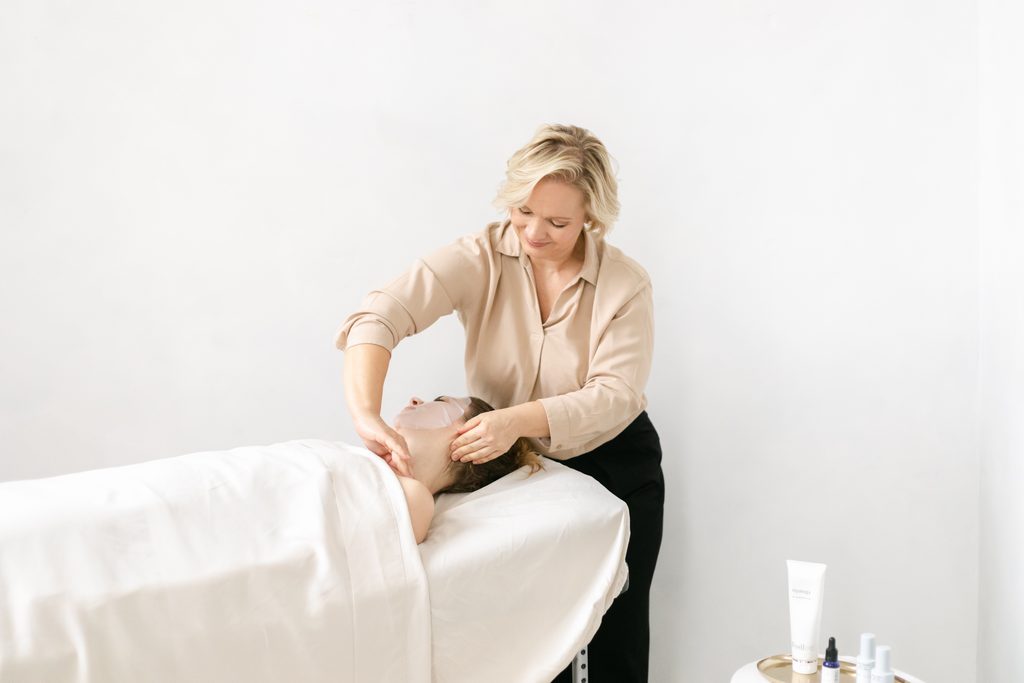
In my Signature Bespoke Facial, I use Forlle’d, a professional skincare range developed in Japan. Its nano-delivery system combines ultra-low molecular weight hyaluronic acid with ionised minerals. These tiny molecules carry active ingredients into the deeper layers without disrupting the skin’s surface. I pair the formulas with facial massage, and the treatment is designed for dehydrated and sensitive skin.
My Advanced Microneedling Facial offers NCTF® as one of two formula options. It’s a professional skin booster containing hyaluronic acid with vitamins, amino acids, antioxidants and minerals. Microneedling creates tiny controlled channels in the skin, so the formula reaches the deeper layers of the skin.
Hyaluronic acid does one job very well: it holds water where your skin needs it. A good serum on damp skin helps day to day. For skin that stays tight or dull despite a careful routine, a treatment that reaches the deeper layers gives it more to work with.
If you’d like to know which approach suits your skin, book a consultation and we can look at it together.

November 20, 2026
TL;DR: A home dermaroller uses short needles that stay in the skin’s outer layer. It helps skincare absorb,...
November 17, 2026
TL;DR: PDRN is purified salmon DNA that helps calm inflammation and supports the skin’s own repair. Its molecules...

November 13, 2026
TL;DR: Blue light targets the bacteria behind breakouts. Red and near-infrared reach deeper to support collagen and calm...

November 9, 2026
TL;DR: Leave make-up off for the first 48 hours. Give saunas and hard workouts a miss for a...
November 2, 2026
TL;DR: Damaged skin barrier signs often start small, like a familiar serum stinging or your face feeling tight...
October 30, 2026
TL;DR: Manual lymphatic drainage has some evidence to back it up but mostly used within a medical setting...