

A London-based facialist with over two decades of experience, blending traditional manual massage with modern skin technologies.
61 Kensington Church Street,
Notting Hill, W8 4BA
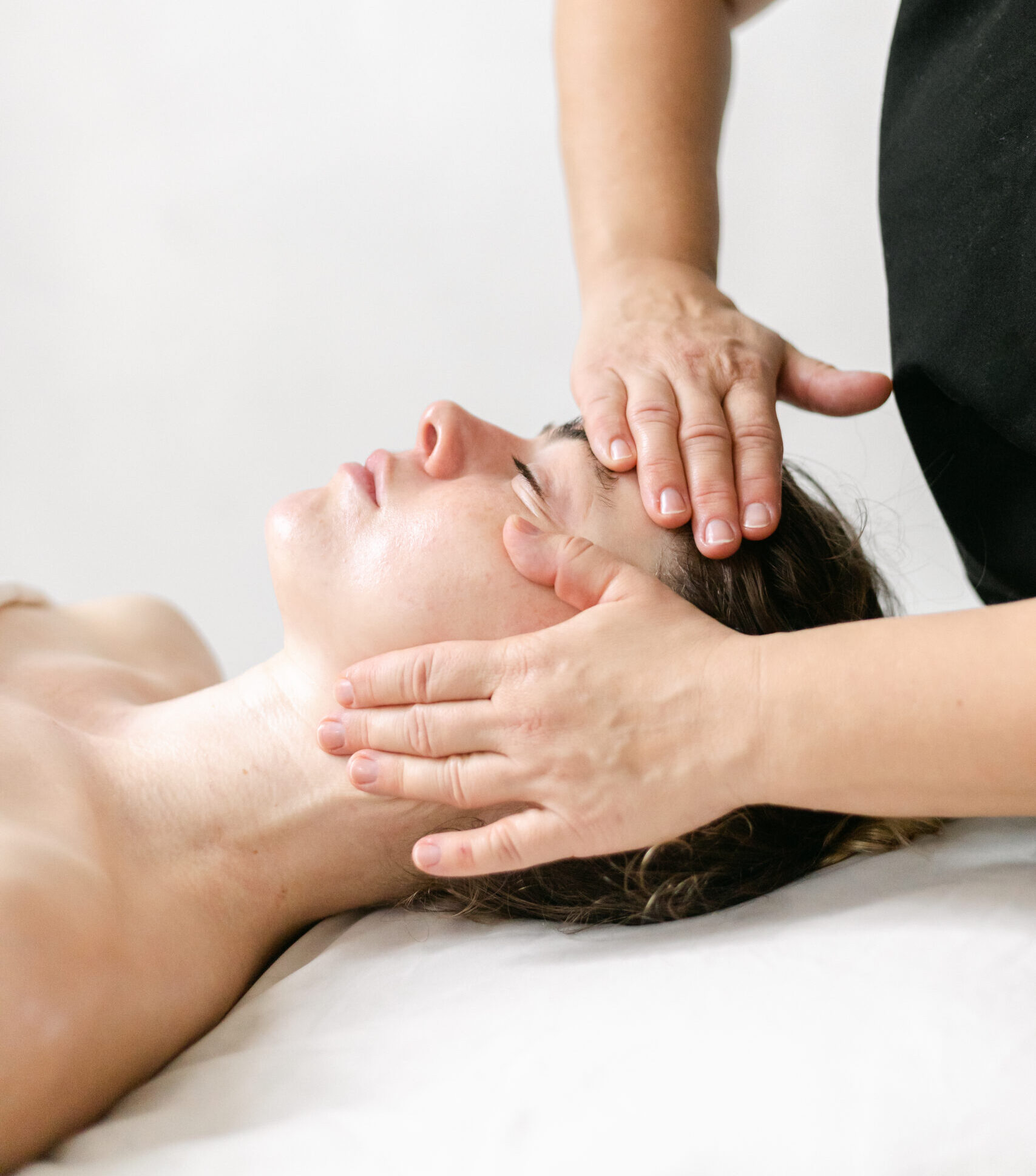
TL;DR: Blue light targets the bacteria behind breakouts. Red and near-infrared reach deeper to support collagen and calm redness. Some of my facials finish with LED because it helps the skin settle afterwards.
LED light therapy uses specific wavelengths of light to prompt a response in your skin cells. Each wavelength reaches a different depth, so each one suits a different concern.
There’s no heat involved and no downtime afterwards. You lie back with your eyes protected while the panel does its work.
Dermalux is one of the best-known professional LED systems. Its panels can deliver a single wavelength or combine several in the same session. Here’s what each light does, and why LED makes a good final step in my facials.
Blue light at 415nm works close to the surface of the skin. Acne bacteria produce compounds called porphyrins. When blue light reaches them, it sets off a reaction that damages the bacteria. That makes it useful for breakouts and congested skin.
Red light at 633nm travels further in. Your cells absorb it in their mitochondria, where energy is made. That extra energy helps fibroblasts produce collagen. Over a course of sessions, red light can soften fine lines and brighten dull skin.
Near-infrared at 830nm is invisible to the eye and reaches deepest of all. It helps calm redness and irritation, and it supports the skin’s natural repair process. Red and near-infrared are often paired, since they work at different depths.
By the end of a facial, your skin has done a lot of work. It can feel warm and a little stimulated. LED gives it time to settle before you leave.
My Vitality Facial is a good example. It starts with a light chemical peel to refine texture. Steam then softens the pores, with gentle extraction where needed. A sculpting massage and an intensive mask follow. I finish the treatment with LED photomodulation to calm inflammation and support collagen production.
LED plays a gentler role in my Biome Restoration facial. This treatment is designed for sensitive skin that finds most facials too stimulating. I use LED towards the end of the session to calm the skin further. It may also help settle visible redness.
Many facials rely on heat, which can trigger flushing in reactive skin. LED produces no heat, so it suits skin that flushes easily.

Home LED masks work on the same principle. The biggest difference is power.
Home masks are kept at a lower output so they’re safe to use without supervision. Each session delivers less light energy to your skin as a result. A professional panel gives a stronger dose in one sitting.
Mask quality also varies a lot. A cheaper mask may not match its stated wavelengths closely. If the wavelength is off, your skin won’t respond in the way the research describes.
A good mask can still help keep your skin steady between appointments. Results at home build slowly and rely on regular use. In clinic, LED comes straight after your skin has been treated, when it’s most ready to respond.
The right wavelength depends on what your skin needs on the day. Breakout-prone skin calls for a different approach to skin that’s sensitive or tired.
If you’re new to my treatments, the Vitality Facial is a good place to start. If your skin is reactive, Biome Restoration may suit you better.
Not sure which fits? Book a consultation and we can talk it through.
November 23, 2026
TL;DR: Hyaluronic acid holds water in the skin and keeps it plump, and it suits almost every skin...
November 20, 2026
TL;DR: A home dermaroller uses short needles that stay in the skin’s outer layer. It helps skincare absorb,...
November 17, 2026
TL;DR: PDRN is purified salmon DNA that helps calm inflammation and supports the skin’s own repair. Its molecules...
November 9, 2026
TL;DR: Leave make-up off for the first 48 hours. Give saunas and hard workouts a miss for a...
November 2, 2026
TL;DR: Damaged skin barrier signs often start small, like a familiar serum stinging or your face feeling tight...
October 30, 2026
TL;DR: Manual lymphatic drainage has some evidence to back it up but mostly used within a medical setting...